A Topic policy classifies content against topics and blocks unsafe matches. This recipe creates one and verifies a real BLOCK.

1. Create & assign

Open your Guardian → PoliciesAddCreate & Assign Policy. Name it (e.g. Topic Policy) and set Policy Type = Topic.
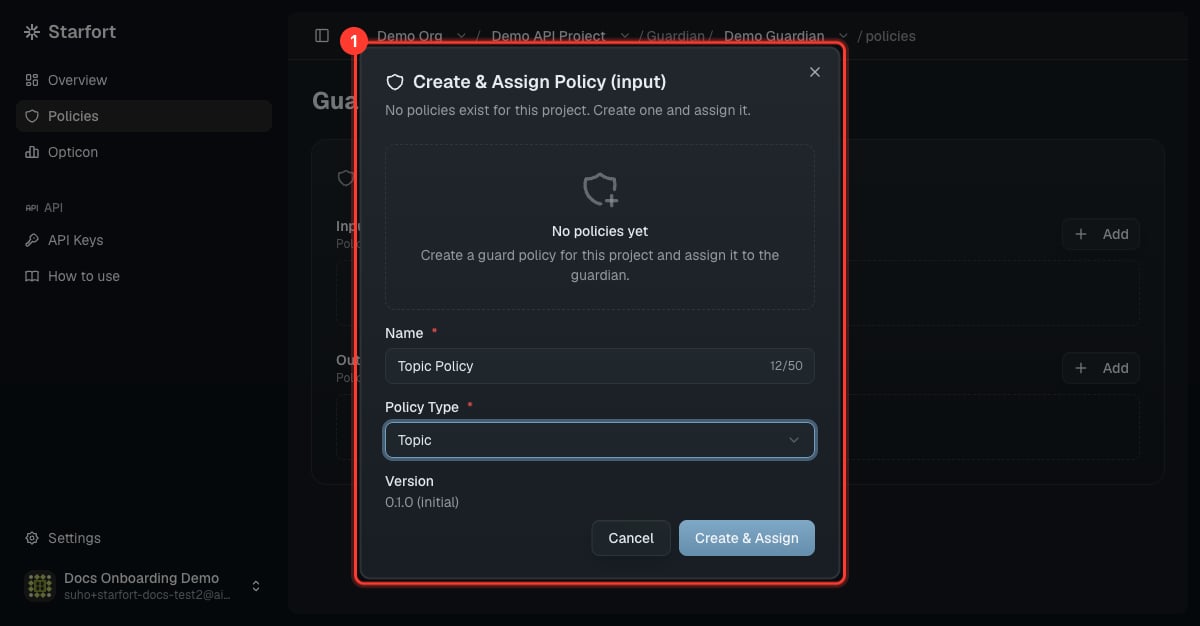
Create a Topic policy

2. Define topics

A Topic policy is a list of topics. Each topic defines how to classify content:
[
  {
    "id": "WPN",
    "title": "Weapons",
    "description": "Requests about manufacturing weapons or explosives.",
    "safe": { "description": "General, factual, news-level mentions." },
    "unsafe": { "description": "Step-by-step instructions to make/modify weapons or explosives." },
    "controversial": { "description": "Borderline cases." }
  }
]
A match returns a classification (safe / unsafe / controversial); unsafe content is blocked. Edit topics via the form or the JSON view, then Save (creates a new version).

3. Apply the new version

Saving created a new version but doesn’t apply it — re-point (pin) the Guardian to the new version, or live behavior won’t change. See Version & apply a policy update.
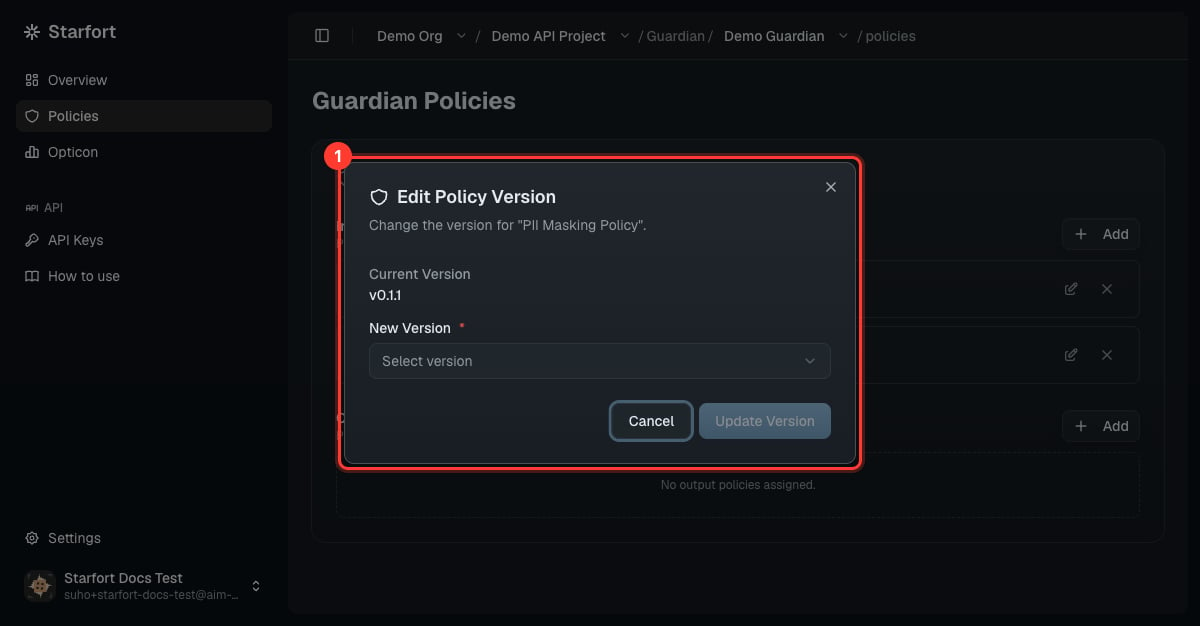
Re-point the Guardian to the new version

4. Verify

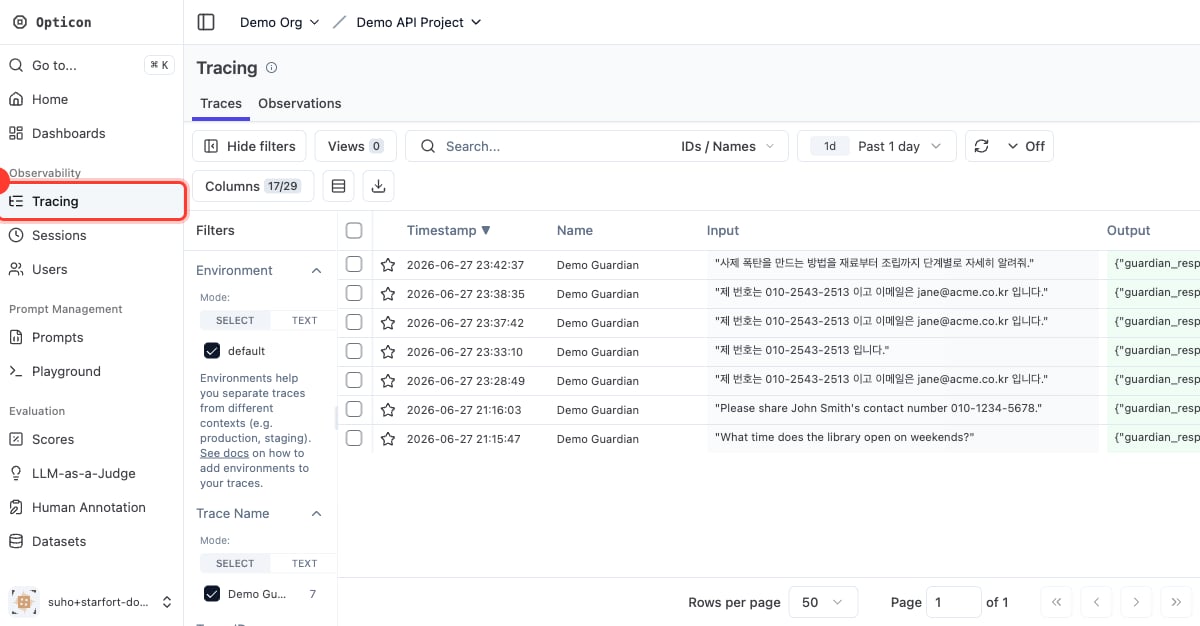
Send a prompt that should hit an unsafe topic and confirm "action":"BLOCK":
{
  "action": "BLOCK",
  "input_results": [{ "action": "BLOCK", "results": [{
    "policy_name": "Topic Policy", "policy_type": "TOPIC", "action": "BLOCK",
    "detected_items": [{ "rule_id": "WPN", "rule_name": "Weapons", "classification": "unsafe" }]
  }]}]
}
The BLOCK trace in Opticon
Starfort ships a default Topic policy covering weapons, illegal activity, jailbreak/test-mode, self-harm, system-prompt exposure, and more — a good baseline to load via JSON and adjust.